

Volume I · No. 01 · Spring 2026

An Aged Citrus.

On Xinhui, the chemistry of patience, and the three generations it took to carry a humble Cantonese herb to a wider shelf — an old apothecary, since 1950.

This issue  ·  Signature Blend Chenpi Teabags  ·  RMB ¥358

Xinhui · Guangdong · Geographical Indication Read on
01 Letter from the Editor

A Citrus, slowly translated.

The fruit you are about to meet has been cellared longer than most American wines have existed. It is not, strictly, an ingredient — it is a position one takes on time itself.

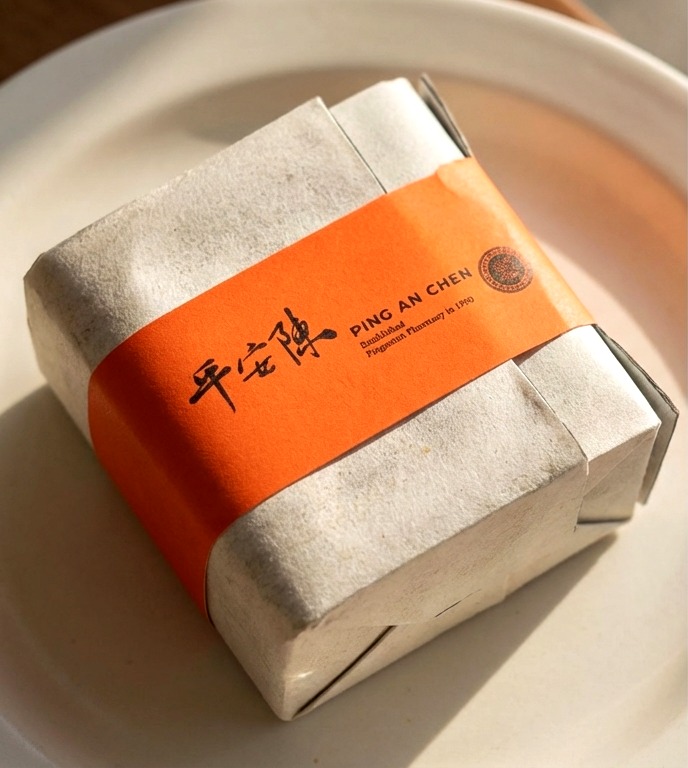
Ours is an old apothecary house, begun in 1950 and carried now by a third generation, devoted to one quiet idea: that food and medicine share a single root, and that the best herbs are not the freshest but the most patiently kept. From that house comes chen pi — aged Xinhui tangerine peel: an apothecary's staple in Cantonese kitchens, a connoisseur's vintage in the cellars of Hong Kong, and, lately, a curious arrival on a wider shelf abroad.

The point of chen pi is not freshness. It is the opposite. A tangerine left to air for less than three years is, in our tradition, simply dried peel. After three, it earns the name chen — old. After thirty, it crosses into what is called 老火, the old fire: a deep, resinous register impossible to forge. The chemistry shifts as much as the language. The bright volatiles recede; the bitterness folds into something rounder, almost medicinal in the literal Cantonese sense — meaning food, on the kitchen side of medicine.

This journal exists because the translation is delicate. A wider audience has a vocabulary for fermentation and for adaptogens, but not yet for cellared citrus. We hope, over the issues to come, to lend the language without losing the thing. The four pieces that follow — on terroir, aging, the cellar, and the ritual — are our first attempt.

We are an old house with a new shelf to set. Welcome.

Ping An Chen  ·  Spring 2026
02 The Vault

Three vintages, drawn from the cellar.

A short selection from our current shelf. Each year is finite; when a vintage is gone, it does not return for another decade.

No. 01 Vintage Reserve, 3–5 year aged chen pi
Vintage Reserve · 3–5 Year

The Threshold

有機生態陳皮  ·  Certified Organic

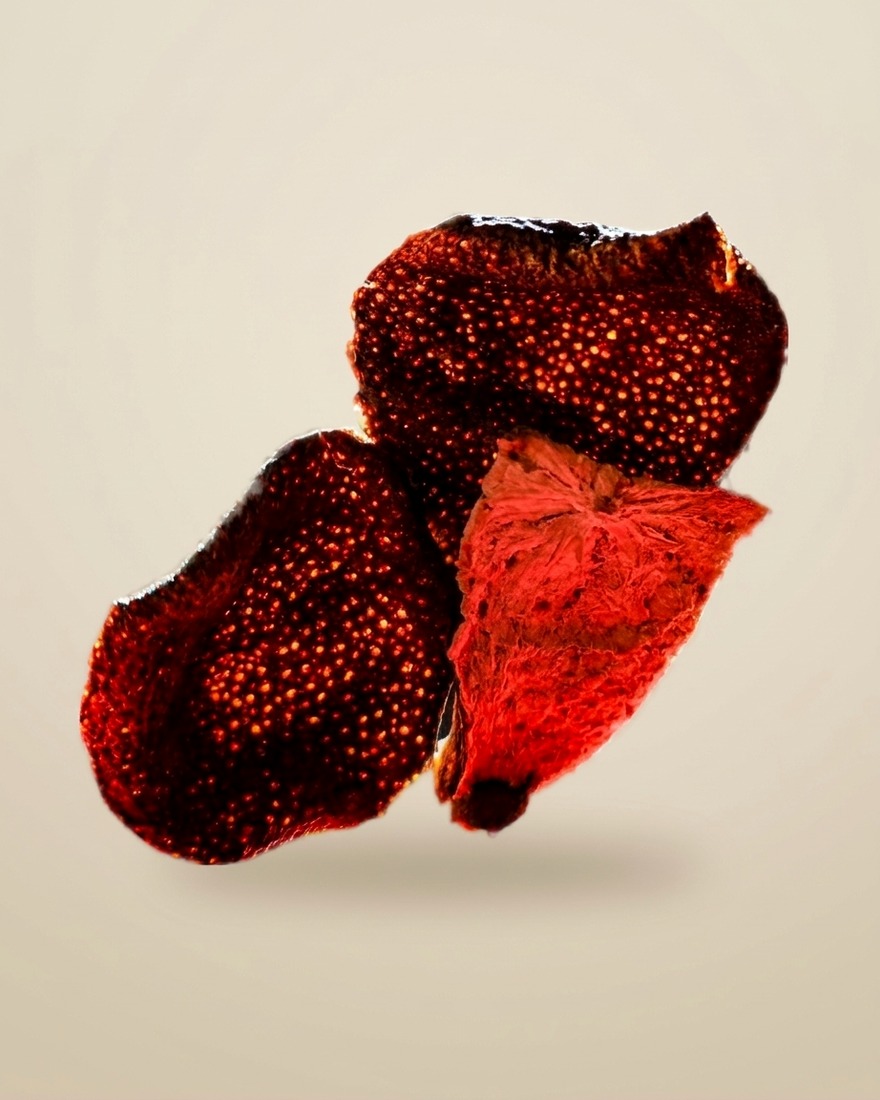
A first encounter with chen pi. Picked from Xinhui's certified-organic groves, dried in open air, and rested for three to five years — long enough to lose its sharpness, young enough to keep the orange-blossom top-note. Best for daily steeping, congees, and an introduction to the form.

AromaHoneyed citrus, light resin
UseMorning steep, congee, broth
CertificationOrganic certified · SGS
Procure from $39
Cellar Selection · 10–25 Year

The Resin Year

遠年陳化東甲圈枝  ·  Dongjia, own-root quanzhi

The vintage that earns the cellar its name. Propagated by the older quanzhi method — own-root air-layering on the mother tree, which keeps the pure bloodline and yields, by half, what a graft does — from the prized Dongjia sub-terroir of Xinhui, and rested between ten and twenty-five years. By this age the peel is mahogany; the aroma, almost medicinal in its resinousness.

Best served in long braises, deep stocks, and as the closing note in slow Cantonese soups — where its long-aged depth makes itself quietly known.

AromaMahogany, resin, faint medicinal
UseBraises, bone broth, slow soups
MethodOwn-root quanzhi (Dongjia)
Procure from $128
No. 02 Cellar Selection, 10–25 year aged chen pi
No. 03 Dongjia Quanzhi, 10+ year aged chen pi
Dongjia Quanzhi · 10+ Year

Own-Root Quanzhi

東甲圈枝【10年+】  ·  圈枝 / Quān Zhī

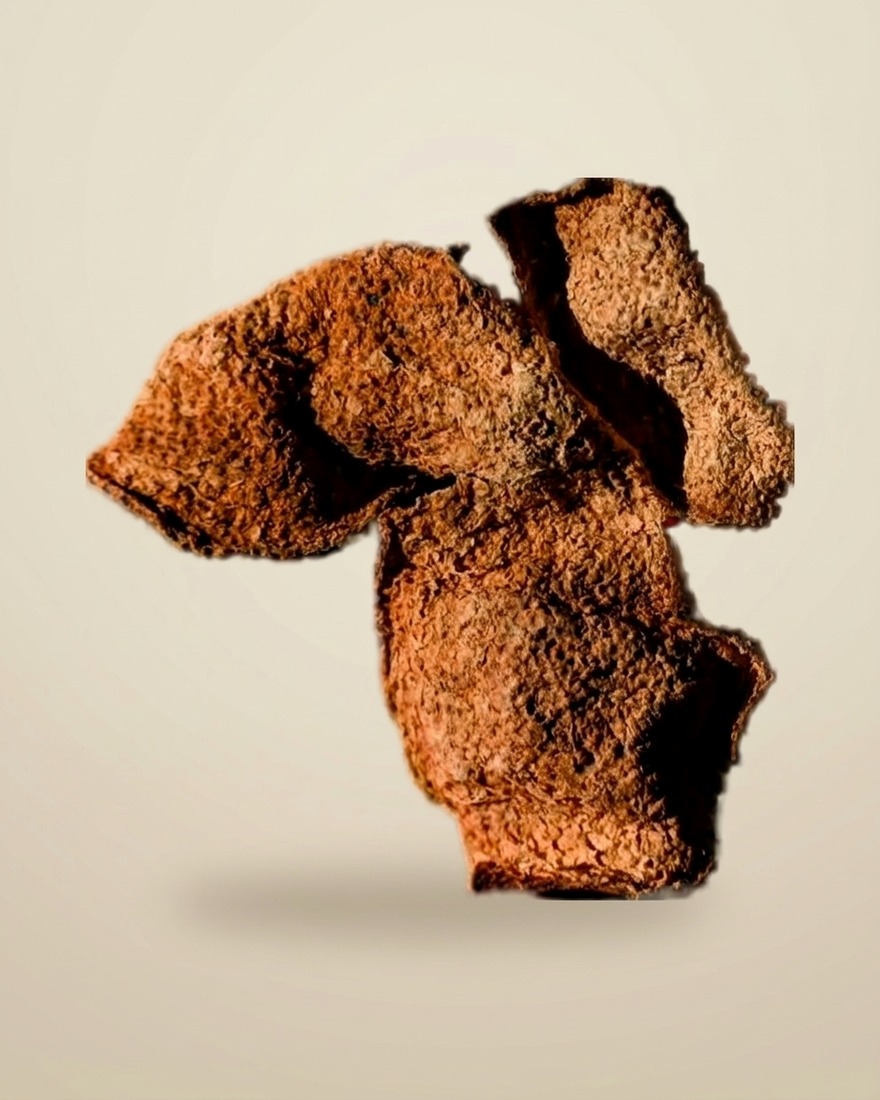
A small lot, collected from the private cellars of Hong Kong and Macau apothecary families, from the lineage of the Beijing master physician Wang Fengchun, and from old Xinhui households — centenarian peel, laid down across generations. The peel is almost black, brittle, and carries the long-aged register the tradition calls 老火 — old fire. There is no analogue in the Western pantry for this aroma; in the apothecary's notebook it is filed under library, leather, and rain.

Sip rather than cook. A single 2g shard yields three steeps; the third is the best.

AromaLibrary, leather, dark resin
UseSteeping; do not boil
ProvenanceHK · Macau · Xinhui private cellars
Procure from $388
03 Terroir

A small delta with strong opinions.

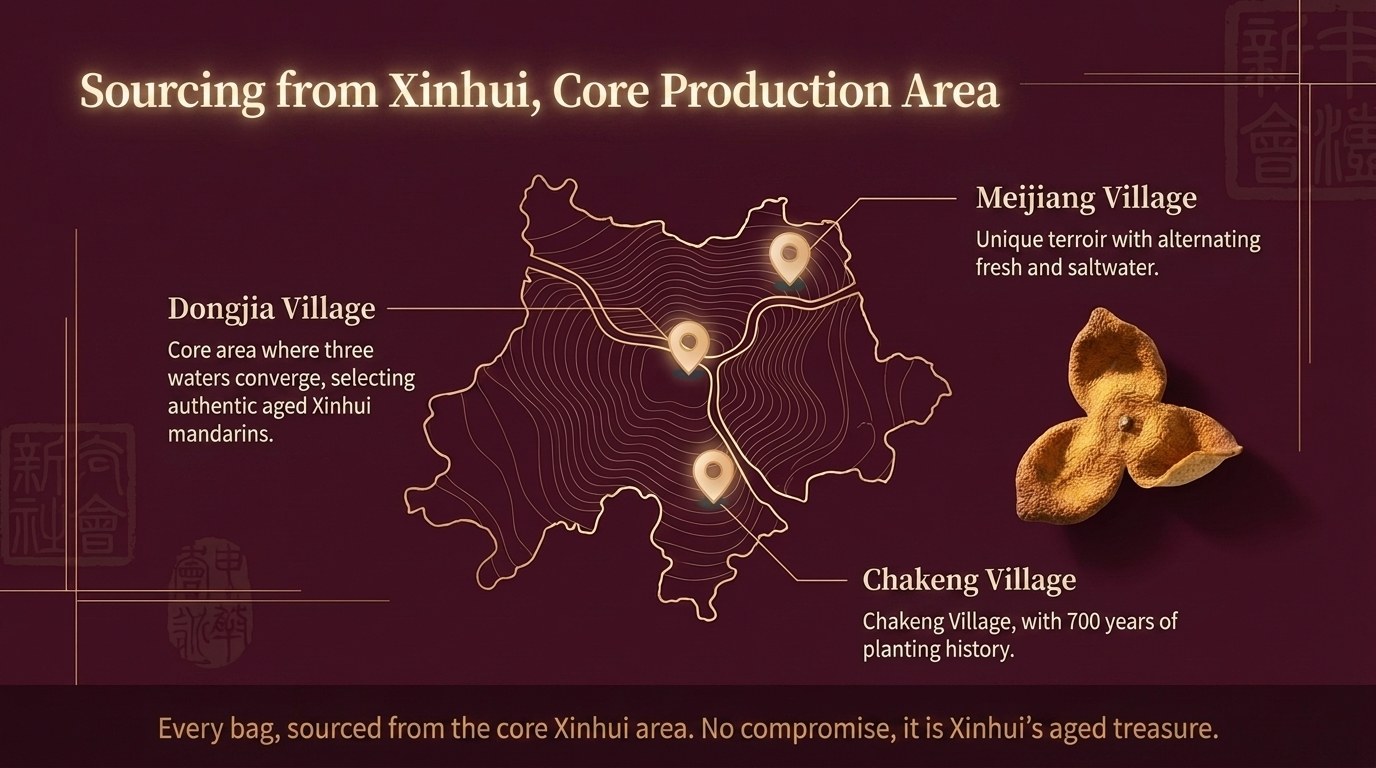
Xinhui sits at the foot of the Pearl River delta — modest, by the scale of the country that grows it, but specific in the way that all good citrus terroirs are specific, and protected under its own Geographical Indication.

Map of Xinhui terroir — Dongjia · Chakeng · Meijiang

There is an old Chinese saying — 橘生淮南則為橘,生於淮北則為枳 — that captures something a sommelier would recognise. A tangerine grown in the wrong place is no longer a tangerine; it is a different fruit, with a different name. Xinhui takes this idea further: only a citrus grown in the right neighbourhoods of one specific delta yields what the tradition calls 新會陳皮, Xinhui chen pi proper — and within those, three premier sub-terroirs stand above the rest.

The reason is geographic. The delta deposits a soil that is part river silt, part marine sediment, faintly saline at depth; the fruit draws its minerals through a long warm wet summer, and the dry season draws them back into the rind. By harvest the peel carries a concentration of aromatic oils that other growing regions simply do not reach — the quality the Xinhui Geographical Indication exists to protect.

Within Xinhui's core district, three sub-terroirs stand at the summit — Dongjia (東甲), Chakeng (茶坑), and Meijiang (梅江) — each with a character of its own. Dongjia, home to the prized own-root quanzhi groves, leans austere and resinous; Chakeng is quieter, almost honeyed; Meijiang aromatic and slightly bitter. It is these three the cellar holds above the rest.

The peels we hold to most closely come from the Dongjia groves, raised by the older method — 圈枝 (quanzhi), an own-root air-layering on the mother tree, favoured by connoisseurs and refused by industrial growers because it yields, by half, what the modern 駁枝 (bozhi) graft does. The bloodline stays pure; the aroma stays finer. The trade is precision for volume. We accept the trade.

04 The Aging

The chemistry of patience.

Three years is the threshold. Thirty, the plateau. What happens in between is the entire argument.

An aged peel is not a preserved peel. It is a transformed one — the volatile having receded, the resinous having concentrated, the bitterness having folded inward.
他藥貴新,惟此貴陳 Most herbs prize the new — this one alone, the old.
Bencao Gangmu 《本草綱目》 (Ming · Li Shizhen)

Fresh tangerine peel is bright, sharp, and full of volatile aromatic oils — the same essence that gives a fresh tangerine its perfume. It is also, in the Cantonese reading, functionally cooling, and slightly hard on the stomach if eaten in any volume.

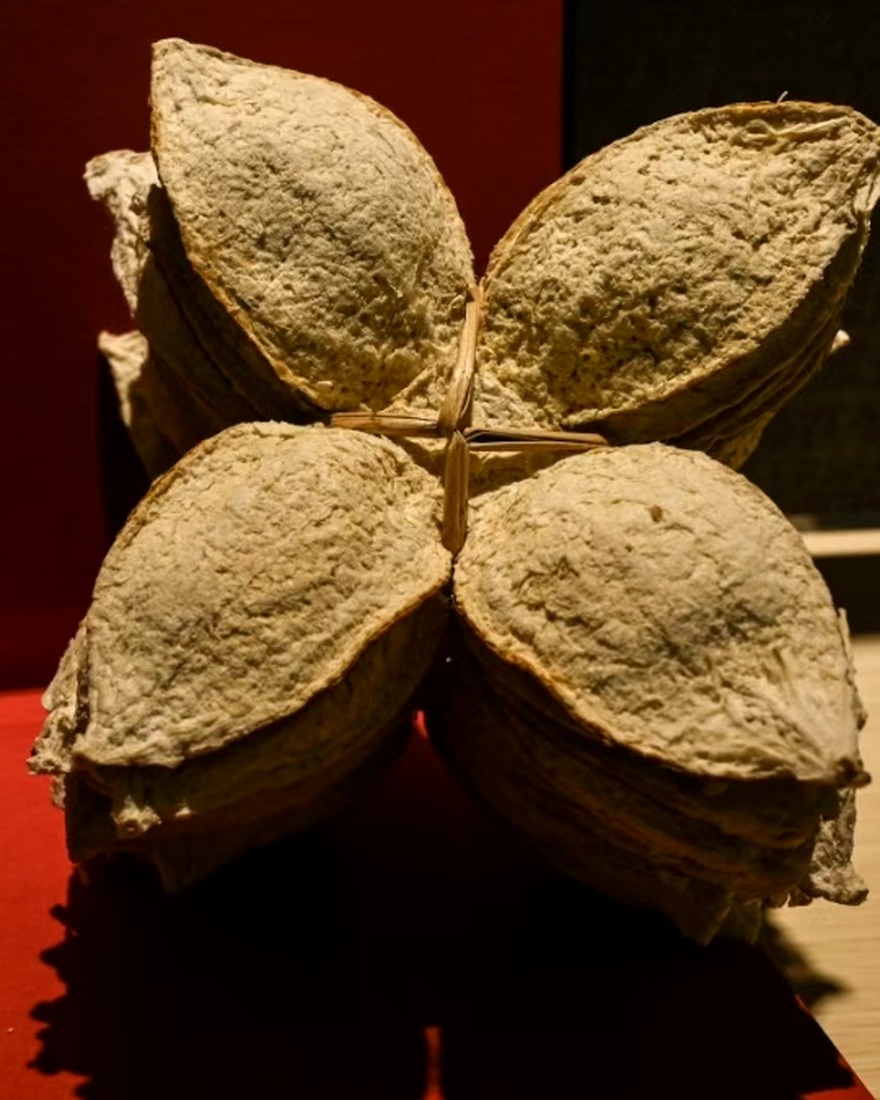
What aging does — slowly, over years, in unsealed clay jars or breathable cotton — is two things at once. The bright volatiles dissipate through the porous walls of the jar. And the heavier, more settled aromatic matter concentrates as the remaining mass falls away. The peel loses what is fugitive and keeps what endures.

By year three, the bitter top-note has folded into something rounder and more savoury. By year ten, the peel has darkened from amber to deep mahogany; the smell becomes resinous, faintly medicinal, like a very old liqueur. By year thirty — what the tradition calls 老火, the old fire — the peel is almost black, brittle as parchment, and carries an aroma that has no clear analogue in the Western pantry. It is best described, when fresh, as the smell of a library after rain.

This trajectory is not only poetry. Every batch we lay down is screened by SGS — an international testing body — across more than a hundred items, so that what enters the cellar is exactly what the label says it is. The classical canon put it more plainly four centuries before any laboratory: 他藥貴新,惟此貴陳 — most herbs prize the new; this one alone, the old. What aging does — for those of us who cook with the peel — is unambiguous: the food it touches improves.

3 yrs Threshold  ·  The peel earns the name chen. Bitterness folds; aromatics stabilise. First infusion-grade.
15 yrs Reserve  ·  陳化 The aromatics deepen and settle. The peel darkens, the resin sets. Suited to bone broth and slow braises.
30 yrs + Old Fire  ·  老火 A vintage. The aroma carries — library, leather, faint medicinal. Collector grade; sip, do not boil.
05 The Ritual

Four ways to keep it in the kitchen.

Aged tangerine peel is not a supplement to be swallowed at speed. It is an ingredient to be used. A few practiced ways into the rhythm:

i

The Morning Steep

Daily  ·  before food

A 2 g shard of three-to-five-year chen pi, dropped into a small porcelain pot of just-off-boiling water (around 90 °C), rested for five minutes, and sipped slowly. The first infusion opens with light orange-blossom; the second deepens into resin. A quieter alternative to morning coffee — without sacrificing the ritual.

Method 2 g peel · 250 ml water · 90 °C · 5 min · re-steep twice
ii

The Bone Broth

Sundays  ·  the long simmer

Add a 5 g piece of 10-to-25-year cellar selection to the back of a slow-simmered chicken or beef broth, in the final hour. The peel will not dominate the broth; rather, it will round the edges, draw a faint sweetness forward, and lend the kind of measured savouriness the Cantonese tradition calls — thick, deep.

Method 5 g peel · final hour of a 6-hour stock · do not boil hard
iii

The Smoothie

Cross-cultural  ·  modern

Soak 2 g of vintage reserve overnight in 80 ml of warm water; in the morning, blend the softened peel and its infusion into a banana-and-almond-milk base. The smoothie carries a faint medicinal undertone that pairs unexpectedly well with sweet fruit. An honest concession to American wellness vocabulary — no apology required.

Method 2 g peel · soaked 8 h · blended with smoothie base · use within 24 h
iv

The Evening Infusion

Nightcap  ·  for the older lots

For a well-aged Dongjia peel: a 1 g shard, broken with the back of a spoon, placed in a small glass, and covered with 100 ml of water just under boil. Allow ten minutes; lift the peel; sip. The peel will hold for two more steeps, the third being — characteristically — the most articulate.

Method 1 g peel · 100 ml water · just under boil · 10 min · three steeps
06 The Lab

Tradition, on a balance.

We hold the tradition's claims to modern instruments — not because the instruments are wiser, but because the wider world reads them, and we would rather be legible than mysterious.

i

Organic Certified

Certified groves

Our Xinhui peel carries organic certification, raised in groves worked without synthetic inputs — the everyday vintage that begins the shelf.

No synthetic pesticides  ·  No additives
ii

SGS Every-Batch Testing

入庫必檢  ·  100+ items

Every batch is screened by SGS — an international testing body — across more than a hundred items before it is allowed into the cellar.

Every batch tested  ·  Before the cellar
iii

Geographical Indication

Xinhui GI

Xinhui chen pi carries the Xinhui Geographical Indication — an origin protection that ties the name to one specific delta, and to the quality only that ground yields.

Origin-protected  ·  Xinhui only
iv

Cellar Provenance

Collected lots

Our oldest peel is collected from select private cellars of Hong Kong and Macau apothecary families and old Xinhui households of Dongjia — laid down across generations.

Aged private holdings  ·  Xinhui Dongjia
On reading the tradition
The classical canon recorded what the cellar knows by feel: 《本草綱目》 — “他藥貴新,惟此貴陳,” most herbs prize the new, this one alone the old — and 《日用本草》, which holds that the Cantonese peel is best of all, and best when many years aged. We hold the tradition's claims to modern instruments not to replace that judgment, but to make it legible: every batch SGS-screened, every origin tied to the Xinhui GI.

We make no therapeutic claim on behalf of chen pi. For any acute or chronic concern, consult a physician. Aged tangerine peel is a food, in the Cantonese reading of the word.

07 The Letters

Two voices, from either side of the shelf.

A note from the house, and a note from the canon — different vocabularies, the same fruit.

i  ·  From the House

On keeping a house old, and setting a wider shelf.

Ping An began in 1950 as an old apothecary house, on a single conviction — that food and medicine share one root, and that the best herbs are kept, not rushed. Three generations on, we have become an appraisal and collection platform for Xinhui chen pi: a place that gathers the finest aged peel and answers for where it came from.

What we are doing now — this journal, the wider shelf, the new audience — is the third generation's project, not the first's. The first generation would not have understood the modern feed. They would, we think, have understood the impulse: to put a good thing in front of a wider set of eyes, and to do it without raising one's voice.

— Ping An Chen The House · Since 1950
ii  ·  From the Canon

On chen pi, in the words the tradition kept.

Aged tangerine peel is one of the few items in the Cantonese apothecary the classics returned to again and again. 《本草綱目》 holds that, alone among herbs, this one is prized old rather than new — “他藥貴新,惟此貴陳.” By the tradition's reading it warms the middle, transforms the damp, and regulates the qi: it eases richness on the stomach, settles the breath, and rounds whatever it is cooked beside.

These are the words the house keeps faith with — not a clinical claim, but a long-tested judgment. The instruments only make it legible; they do not improve on it.

— 《本草綱目》 · 《日用本草》 From the Classical Canon
08 Procure

When you are ready.

The cellar is small, and shipped from Hong Kong. There is no subscription, no replenishment notice — you come back to us when you are ready, and we will be here.

Procure the Cellar
Shipped from Hong Kong Organic certified · SGS-tested Secure hosted checkout
Shop All

The Full Shelf

Twelve products · one tap to buy